 By Andrew Armstrong
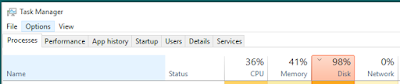
If Task Manager shows unusually high disk usage on Windows 8.1 or Windows 10, even when you’re not actively doing anything disk-intensive, the cause is very often automatic virtual memory (paging file) management rather than a fault.
Why this happens
Windows 8.1 and 10 both manage the paging file size automatically by default, growing and shrinking it dynamically. This is convenient but not always efficient, and can generate a surprising amount of background disk activity. The commonly recommended manual configuration instead is:
- Initial size: equal to the amount of RAM in the machine.
- Maximum size: double the amount of RAM in the machine.
Setting it manually
- Right-click the Start button and select System.
- Click Advanced system settings.
- On the Advanced tab, under Performance, click Settings.
- On the Advanced tab of that new window, under Virtual memory, click Change.
- Untick Automatically manage paging file size for all drives.
- Select the drive you want to configure.
- Choose Custom size.
- Set Initial size to your RAM amount in MB (not GB: e.g. 16GB of RAM is 16384 MB).
- Set Maximum size to double that figure.
- Click Set, then OK through the remaining dialogs.
- Restart the machine for the change to take effect.
Also worth checking: SuperFetch
The SuperFetch service (renamed SysMain on newer builds) preloads frequently-used applications into memory and can generate significant background disk I/O on some systems, particularly ones with a traditional HDD rather than an SSD. If disk usage is still high after the paging file change, try stopping and disabling this service and rebooting: on SSD-equipped machines especially, SysMain often provides little benefit and is safe to disable.
Screenshots: Virtual Memory Settings

Gear We Recommend
A few general tech accessories worth having alongside this.
Browse our General Tech Accessories picks on AmazonAs an Amazon Associate, TechyGeeksHome earns from qualifying purchases.
Discover more from TechyGeeksHome
Subscribe to get the latest posts sent to your email.
