 By Andrew Armstrong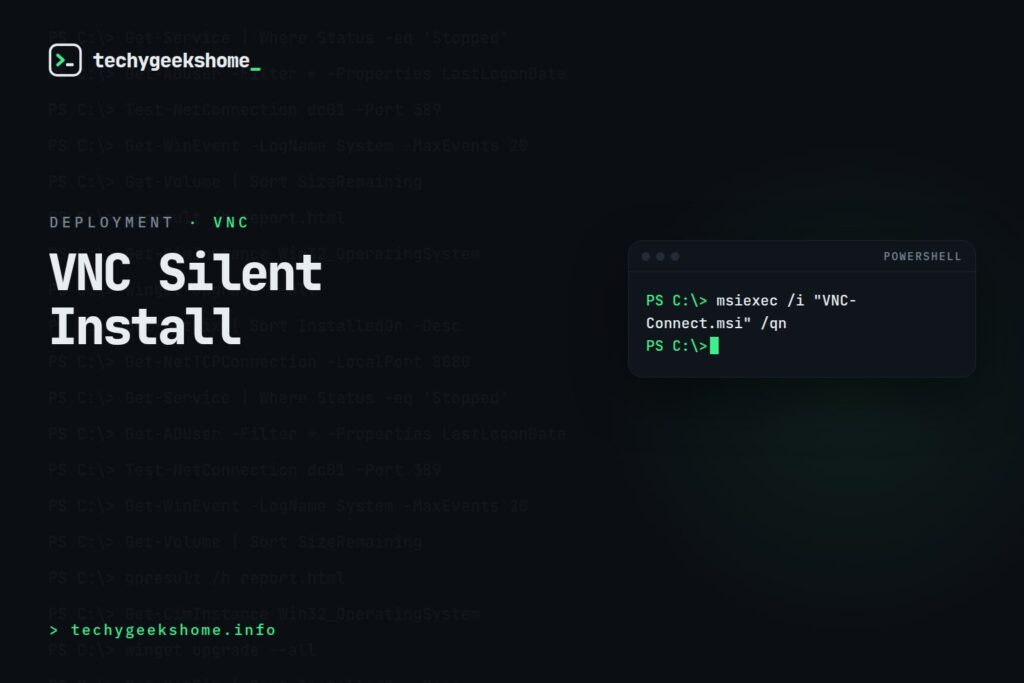
VNC Silent Installation Command Line
The exact silent-install syntax depends on which VNC product and installer format you’re deploying: the VNC ecosystem covers several unrelated products (RealVNC Connect, TightVNC, UltraVNC) that don’t share one installer technology. Here’s the current syntax for the ones you’re most likely to be pushing out via SCCM, Intune, or Group Policy.RealVNC Connect (modern MSI-based installer)
RealVNC’s current product, RealVNC Connect, ships as an MSI rather than an Inno Setup EXE. The basic silent install is:msiexec /i "VNC-Connect.msi" /qnJOINCLOUD property with your organisation’s cloud connectivity token:
msiexec /i "VNC-Connect.msi" /qn JOINCLOUD=<your-cloud-connectivity-token>JOINGROUP and JOINNAME properties are also available if you’re assigning the device to a specific team/group and a friendly name at install time: check RealVNC’s own deployment documentation for the full property reference, since it’s updated alongside new releases.
TightVNC / UltraVNC / older Inno Setup-based EXE installers
For the classic Inno Setup EXE installers still used by TightVNC, UltraVNC, and older RealVNC releases, the standard silent-install switches are:"VNC-Setup.exe" /VERYSILENT /NORESTART/VERYSILENT suppresses the installer UI entirely (not even a progress bar), and /NORESTART stops it from rebooting the target machine automatically once the install finishes: useful when you’re deploying during business hours and don’t want an unexpected reboot.
Substitute the actual installer filename for your specific product and version, since available switches can differ slightly between vendors: check the installer’s own documentation, or run it with /? on a test machine first if you’re not certain which switches it supports. TightVNC also ships an MSI package for its Windows builds as an alternative to the EXE, in which case the standard msiexec /i "tightvnc.msi" /qn pattern applies instead.
Which one should you actually deploy?
If you’re standardising on one VNC product for a fleet in 2026, RealVNC Connect is the more actively maintained option with proper cloud-relay connectivity for remote access outside the LAN, while TightVNC/UltraVNC remain lightweight, license-free choices for pure LAN-only remote support. Pick based on whether you need off-network connectivity, not just habit.🛠️
Gear We Recommend
A few general tech accessories worth having alongside this.
Browse our General Tech Accessories picks on AmazonAs an Amazon Associate, TechyGeeksHome earns from qualifying purchases.
Discover more from TechyGeeksHome
Subscribe to get the latest posts sent to your email.
