 By Andrew Armstrong
Part of our SCCM and ConfigMgr guides: every related guide in one place.
If you want your end user experience to show them the progress of an installation from your Software Center, then you will need to ensure that you have your command lines and user experience tab setup correctly. We have seen many people follow the “install in the background and don’t tell anyone the progress” method time and time again, however, how is your end user ever supposed to know if the installation has completed, run or failed? As Configuration Manager admins, obviously we would know by looking at the Software Center and it giving us the information – however, most users are not interested in such things and just want their software installed with a nice pop up box telling them the progress.So, what should we do to provide the user with the experience that they want?
In simple terms, Configuration Manager will pretty much take care of all this for you if you set up your application deployment correctly. Go into your application and browse to the Deployment Types tab: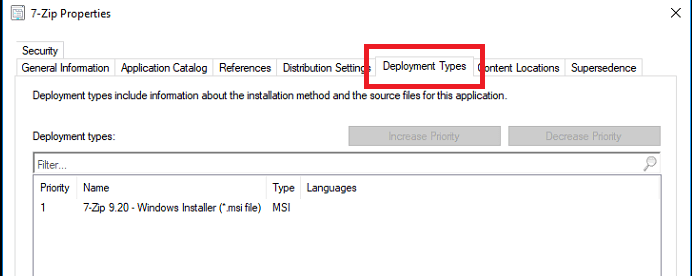 Then edit your deployment type and go into the User Experience tab:
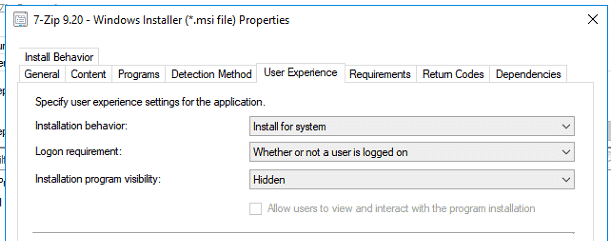
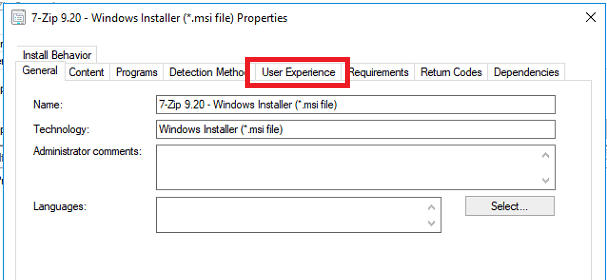 Then within this tab is where your select the options for your end user experience. You can have the application setup so that it is completely hidden and the end user will not get any information apart from that given in the Software Center. To set this up you should use the following selections:
- Installation behavior: Install for system
- Logon requirement: Whether or not a user is logged on
- Installation program visibility: Hidden
- Allow users to view and interact with the program installation: this would be grayed out with the above selections
 So, what if you do want to show your end user the software installation progress, but no options for them to have to check or run?
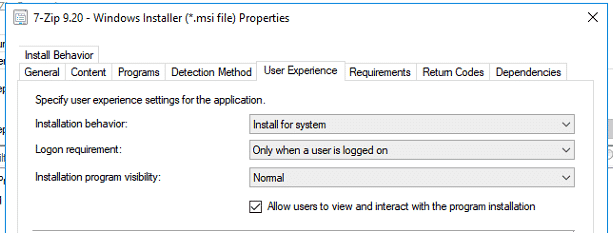
You should then change these settings to the following:
So, what if you do want to show your end user the software installation progress, but no options for them to have to check or run?
You should then change these settings to the following:
- Installation behavior: Install for system
- Logon requirement: Only when a user is logged on
- Installation program visibility: Normal
- Allow users to view and interact with the program installation: this should be checked
- Microsoft Windows & Server Evaluation, KMS & Product Keys: The Complete Free Guide (2026)
- Windows Admin Center: WSUS/SCCM Update Category Explained
- Java Enterprise Deployment
 However, a word of warning. In this setup, you will not be able to see the application within an Operating System Deployment Task Sequence as it allows user interaction. So, you could have two deployment types – one for OSD and one for the Software Center.
Feedback
If you have any questions or feedback on this guide, please feel free to leave us a message below in our comments section and we will get back to you as soon as we can.🛠️
Gear We Recommend
Testing configs is easier with a dedicated admin machine set up right. Here’s the kit we use.
Browse our Windows Admin Toolkit picks on AmazonAs an Amazon Associate, TechyGeeksHome earns from qualifying purchases.
Discover more from TechyGeeksHome
Subscribe to get the latest posts sent to your email.
