 By Andrew Armstrong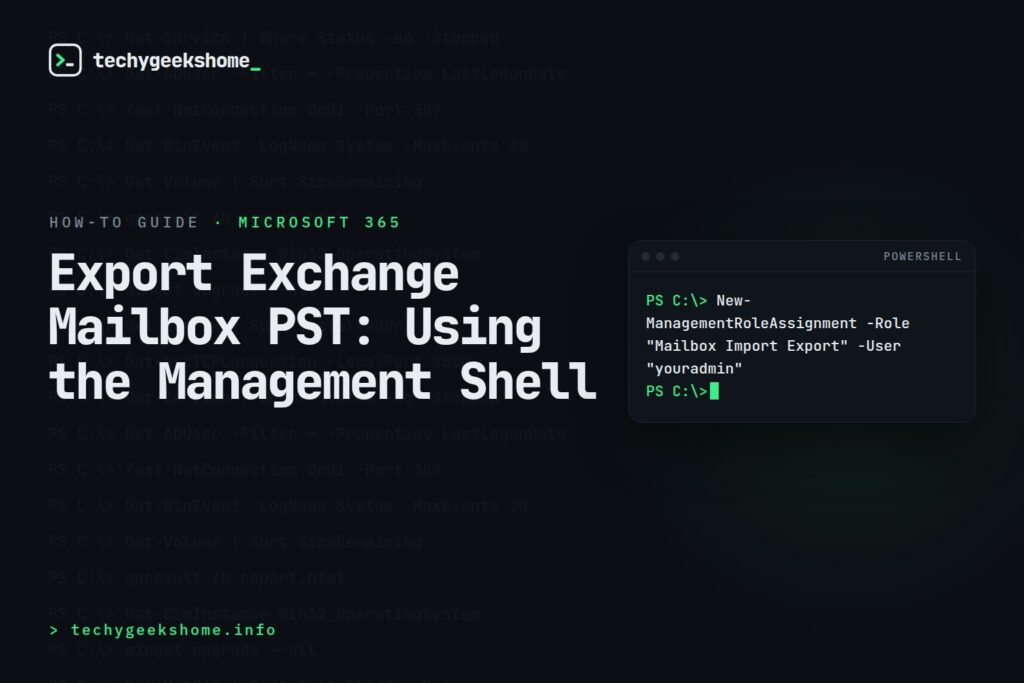
Legacy Syntax (Exchange 2007/2010)
Export-Mailbox -Identity "alias" -PSTFolderPath "C:\MailArchives\alias.pst" -EndDate "01/01/2015" -ExcludeFolders "Contacts","Calendar"
Export-Mailbox was removed entirely in Exchange 2013 and later, so this syntax only works on Exchange 2007/2010.
Modern Syntax (Exchange 2013+ On-Premises)
New-MailboxExportRequest -Mailbox "alias" -FilePath "\\server\share\alias.pst" -ContentFilter {Received -lt "01/01/2015"}
This requires a UNC network share path (not a local drive letter), and the Mailbox Import Export role assigned to your account, which isn’t granted by default: add it with New-ManagementRoleAssignment -Role "Mailbox Import Export" -User "youradmin" first if the export request fails with a permissions error.
Exchange Online
PST export isn’t available via PowerShell cmdlet in Exchange Online: instead, use an eDiscovery/Content Search case in the Microsoft Purview compliance portal, which supports exporting search results to PST for a given mailbox and date range.Where On-Prem Stands in 2026 (Updated for 2026)
Worth noting if you’re still running the “Modern Syntax” section above: Exchange Server 2016 and 2019 both reached end of support in October 2025, and the only currently-supported on-premises release is Exchange Server Subscription Edition (SE), which reached general availability in July 2025 and carries the sameNew-MailboxExportRequest cmdlet and Mailbox Import Export role requirement unchanged from 2013+. If you’re planning a fresh export workflow rather than maintaining an existing one, it’s worth confirming you’re doing so against a supported SE install rather than an out-of-support 2016/2019 server.
Resources
🛠️
Gear We Recommend
Testing configs is easier with a dedicated admin machine set up right. Here’s the kit we use.
Browse our Windows Admin Toolkit picks on AmazonAs an Amazon Associate, TechyGeeksHome earns from qualifying purchases.
Discover more from TechyGeeksHome
Subscribe to get the latest posts sent to your email.
