 By Andrew Armstrong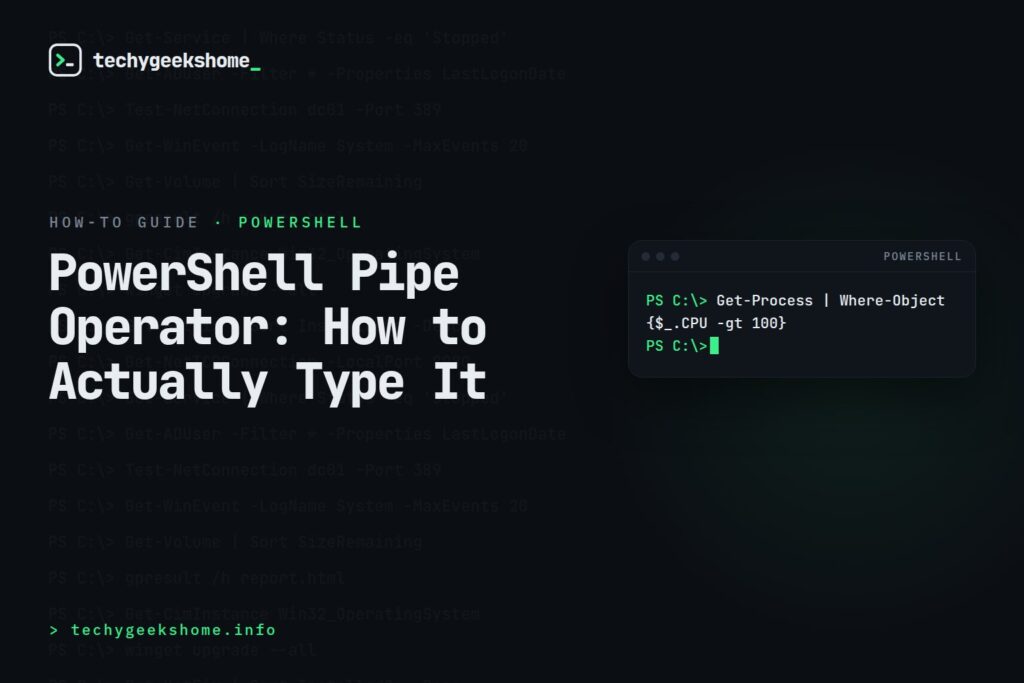
Part of our PowerShell guides: every related guide in one place.
How Do You Type a PowerShell “Pipe” Character?
It sounds like a trivial question, but it trips up a surprising number of people getting started with PowerShell: especially anyone typing commands from a screenshot or a guide where the pipe character isn’t obviously distinguishable from other symbols on the page. The pipe you see in PowerShell commands, as in:Get-Process | Where-Object {$_.CPU -gt 100}|), found on a standard UK or US keyboard as a shifted key sharing its position with the backslash (\): typically just above the Enter key or on the same key as backslash, depending on your specific keyboard layout. Press Shift and the backslash key together to type it.
If it’s still not appearing correctly, double-check your Windows keyboard layout matches your physical keyboard (mismatched layouts are a common cause of certain symbol keys producing the wrong character), and be aware that some fonts render the pipe character as a broken/dashed vertical bar rather than a solid one: that’s just a font rendering choice and doesn’t affect how PowerShell interprets it.
Screenshots: Typing the Pipe Character


Still True in 2026 (Updated for 2026)
This hasn’t changed: the pipe character is still Shift + the backslash key on UK/US keyboard layouts, whether you’re on Windows PowerShell 5.1 or the current cross-platform PowerShell 7.x (the latest stable release is 7.6.3 as of mid-2026). The pipe’s job in the language hasn’t changed either: it still passes objects (not just text) from one cmdlet to the next down the pipeline. If you’re on a non-UK/US layout and still can’t find it, most layouts still place it somewhere near Enter or share a key with backslash: check your specific layout’s reference chart if Shift+backslash doesn’t produce it.🛠️
Gear We Recommend
Testing configs is easier with a dedicated admin machine set up right. Here’s the kit we use.
Browse our Windows Admin Toolkit picks on AmazonAs an Amazon Associate, TechyGeeksHome earns from qualifying purchases.
Discover more from TechyGeeksHome
Subscribe to get the latest posts sent to your email.
