 By Andrew Armstrong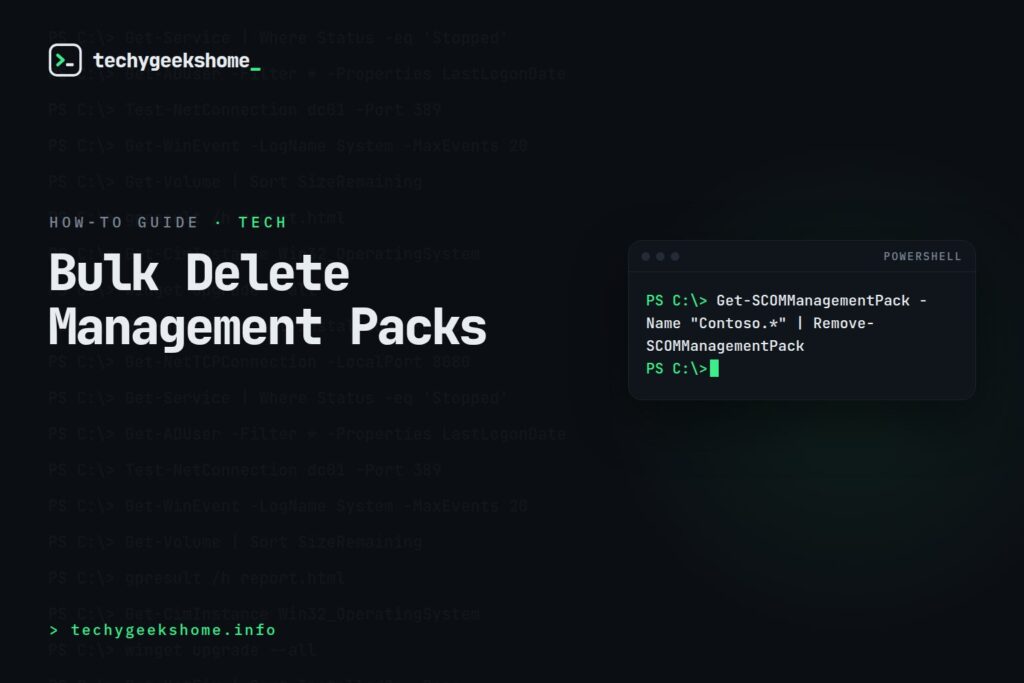
The Command
Get-SCOMManagementPack -Name "Contoso.*" | Remove-SCOMManagementPackThis removes every management pack whose name matches the pattern: adjust the
-Name filter to match the packs you actually want to remove.
Handling Dependency Errors
SCOM won’t let you remove a management pack that other, still-installed management packs depend on: you’ll get an error naming the dependent pack. When removing a related group of packs (for example, a whole management pack bundle for a decommissioned application), sort by dependency and remove the ones that depend on others first, then work down to the base packs:Get-SCOMManagementPack -Name "Contoso.*" | Sort-Object -Property {$_.References.Count} -Descending | Remove-SCOMManagementPack
If a pack still fails to remove, check the console’s dependency view (or Get-SCOMManagementPack -Name "Contoso.Base" and its dependent packs) to find what’s still referencing it.
Doing This on System Center 2025 (Updated for 2026)
The current release is System Center 2025: Operations Manager (GA November 2024, now on Update Rollup 1 with a March 2026 hotfix). As part of a broader System Center naming standardisation, the primary documented cmdlet names have shifted toGet-SCManagementPack and Remove-SCManagementPack: but Microsoft’s own docs confirm Get-SCOMManagementPack and Remove-SCOMManagementPack (the names used above) still work unchanged as alternate names, so nothing above needs to change on an existing script. If you’re writing new automation today, it’s worth using the SC-prefixed names to match current documentation:
Get-SCManagementPack -Name "Contoso.*" | Remove-SCManagementPackThe dependency-blocking behaviour itself is unchanged: Operations Manager still refuses to remove a management pack that another installed pack references, regardless of which cmdlet name you use to request the removal.
Resources

🛠️
Gear We Recommend
A few general tech accessories worth having alongside this.
Browse our General Tech Accessories picks on AmazonAs an Amazon Associate, TechyGeeksHome earns from qualifying purchases.
Discover more from TechyGeeksHome
Subscribe to get the latest posts sent to your email.
